Bow Care & Warranties
I craft my bows with a lot of love and care and do my utmost to ensure their as durable and efficient as they can be. However being made of natural materials they require more care than fiberglass laminate bows.
Please note the bows may differ in poundage slightly from what is advertised when shipped. This is due to the wood’s moisture content changing as it is shipped elsewhere in the country.
Keeping the brace height the same is important for the bow to perform at its best. All my bows bar the youth bows have a brace height of 5 1/2” from the belly handle to the string. Please do not increase the brace height beyond this as it can overstress the limbs.
Oiling every 6 months to a year will help extend their life greatly as well as help keep them at an optimal moisture content. Too dry and the bow can break, too wet and it will shoot sluggishly and take more set.
Please store the bow either horizontally on a rack or vertically hanging on a wall peg. Do not leave the bow leaning against the wall for a long extended period of time as it can change the tiller and harm the longevity of the bow.
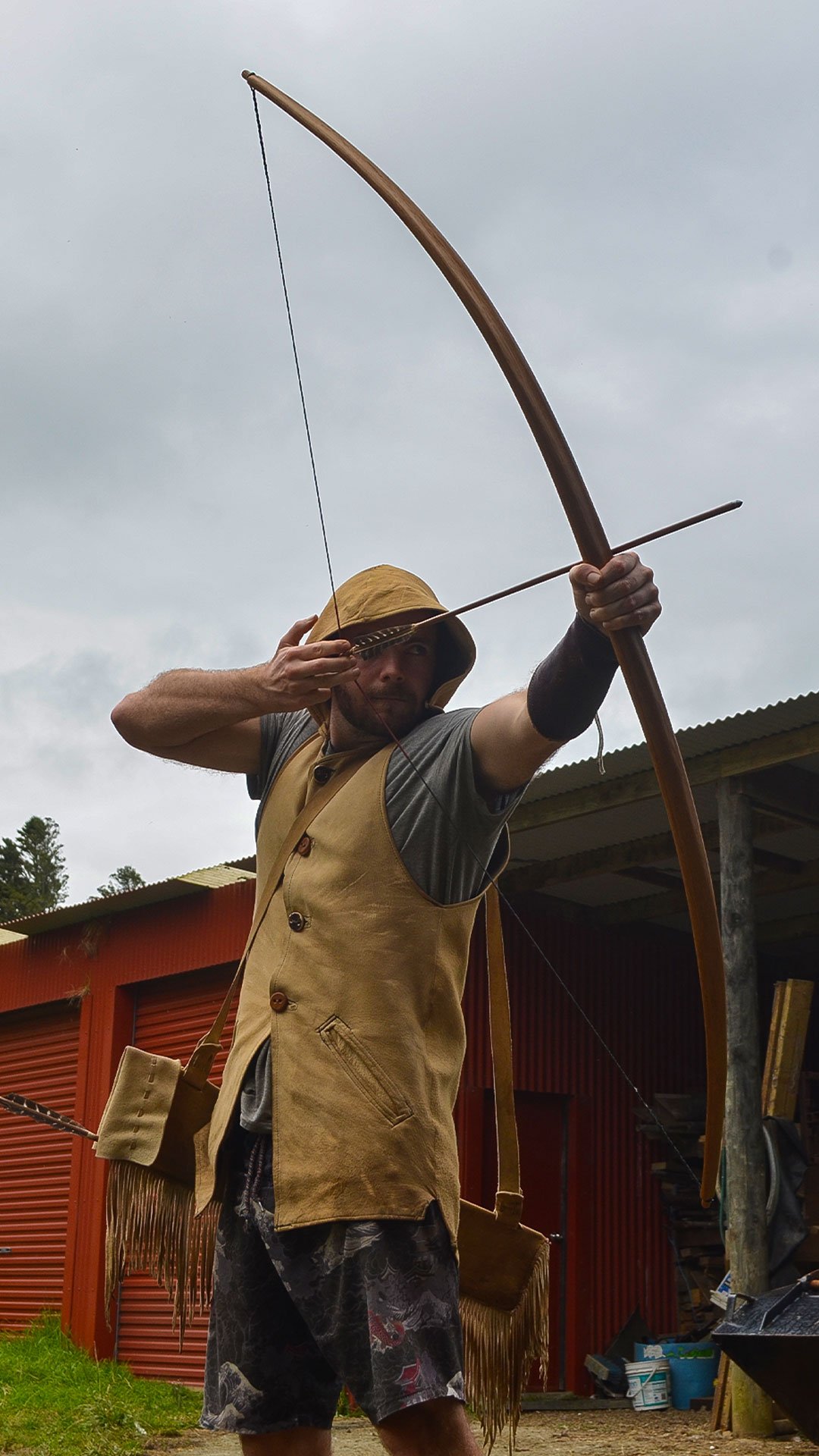
When shooting ensure the bow is not overdrawn past its maximum draw limit. This won’t break the bow but can overstress the belly fibers and may cause the bow to degrade over time. It can also cause the bow to take “set” where the limbs bend towards the archer even when unstrung. This means the bow is weaker due to the limbs putting less tension on the string. To avoid this make sure the bow is not overdrawn and consider marking your arrows at the maximum draw length as a visual guide.
After shooting sessions or retiring from hunting for the day ensure the bow is unstrung and left to rest. The bow can be left strung all day when hunting but needs to be unstrung and allowed to relax after the day is done. Don’t leave the bow sitting strung in the hot sun for hours, its not healthy for the limbs to be left to cook when strained. Please don’t leave the bow strung on the wall either as this will weaken the limbs over time and will render the bow near useless for shooting.
Please don’t let random people, friends or family draw the bow without instruction as to how long the draw length is. They could accidentally pull the bow far beyond its maximum draw length and cause a breakage. That’s not a fun situation for anyone, speaking from experience.
Finally please check the bow every so often visually to make sure there are no cracks or damage that could affect the safety of the bow. It’s highly unlikely anything will be damaged if the bow is used and treated properly and will give you many many years of fun and happy shooting.
Kind Regards,
Threy - TCA
Warranties:
I do my best to craft every bow with the utmost care and considerations. Each bow I make is shot over 200 times at maximum draw before being approved for sale. They are thoroughly tested and deemed safe and stable before being listed. Wooden bows lifetimes can be measured in decades or even lifetimes is they are properly cared for and treated with respect.
In spite of this they can rarely fail due to user error or the wood giving out. This is highly unlikely and if the bow is used within the practical margins outlined above they are very safe.
If a bow fails from a crafting error while being used appropriately within 1 year I will try and get a replacement bow to you as soon as I can.
The warranty is voided if any of the “don’ts” actions outlined below are taken in the reference section.
Cracks, splinters and catastrophic limb failures are covered by the warranty as long as no user error caused the breakage.
Reference:
Do
Oil the bow every 6 months to a year depending on the frequency of use.
String the bow using the step through method.
Unstring the bow at the conclusion of each shooting session.
Only draw the bow within and to the maximum draw length
Use appropriate weight arrows. Too light or too heavy aren’t healthy for the bow 10gpp is optimum. Example: a 50lb bow needs an arrow weight of 500 grains.
Check the bow visually for any damage
Check the string for any nicks cuts or abrasions that may affect shooting
Store in an appropriate place inside either vertically on a wall peg or horizontally on a bow rack
Wax the entire bow before a hunting trip
Wax the string whenever it starts to look fuzzy.
Keep the bow in the shade on hot sunny
Don’t
Overdraw the bow
Draw and release the string with no arrow. This is called dry firing.
Increase the brace height drastically as this can overstress the limbs
Leave the bow strung for long periods of time unattended
Let random people, friends or family draw the bow without instruction as to how long the draw length is.
Store the bow leaning against a wall for an extended period of time, this can potentially weaken which ever limb is on the ground.
Store the bow in a basement or damp area without a dehumidifier
Shoot arrows under 8 grains per pound of draw weight
Any and all of these don’t actions will void the warranty